Telling an Admiral the Truth
I’ve told an admiral to her face that a comment she made set us up for failure. Here’s how that happened, and why I’d do it again.
As a crisis communicator, you have to tell your principal officials, your C-suite, whoever’s in charge, the unvarnished truth. When things are on fire, literally and figuratively, you have to say what the ground truth is and how to course correct.
I’ve done this more times than I can count, often over something as simple as a staffing issue or an annual campaign. I’ve trained thousands of communicators on how important this is during a response, but one occasion stands out more than any other: the time I told the admiral initially in charge of the Deepwater Horizon response that a comment she made set us up for failure from the start.
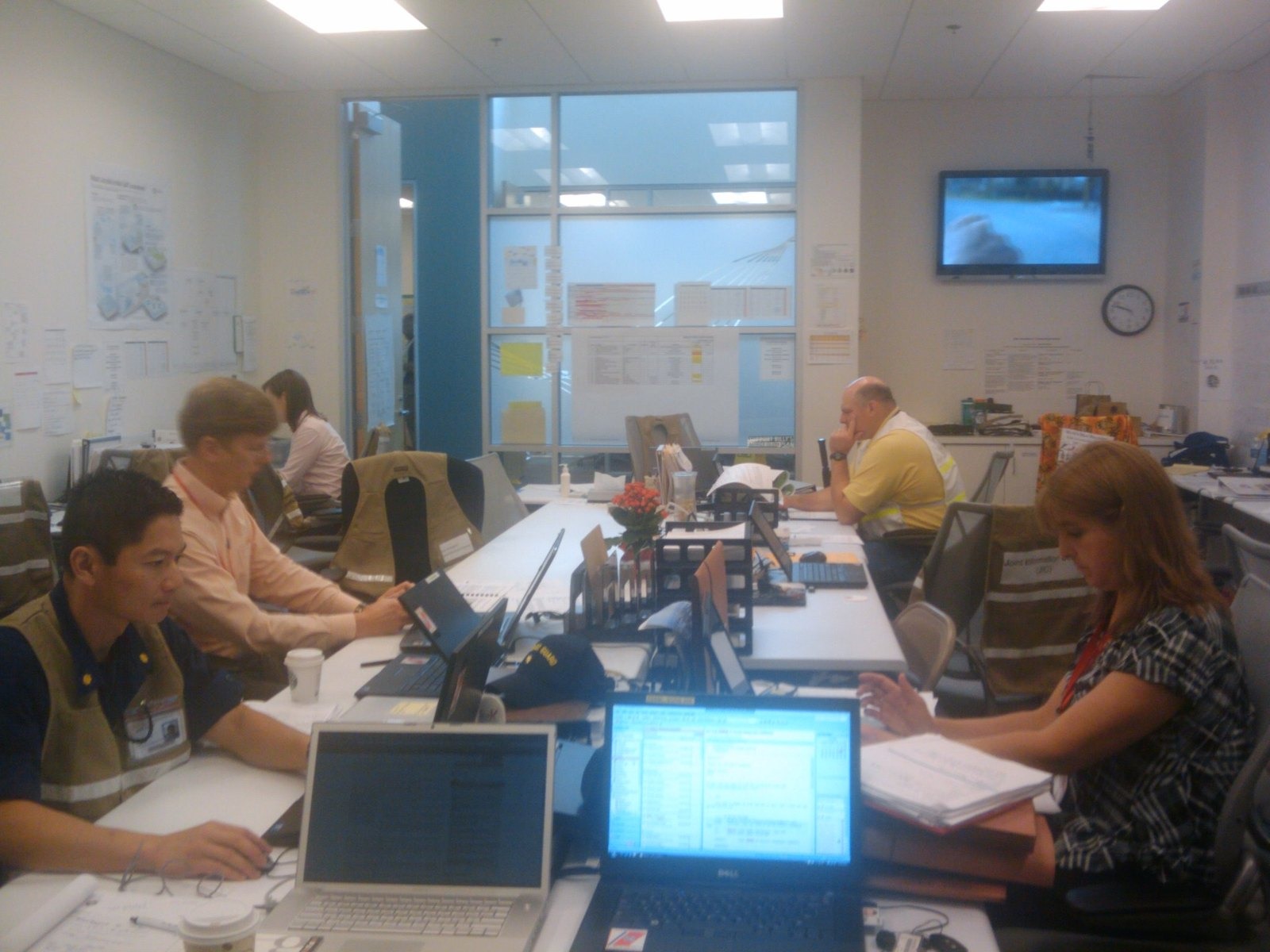
At one point, for 21 days, I worked out of the Houma, LA command post during Deepwater Horizon, eventually serving as Assistant Public Information Officer for Media Relations, covering Louisiana, surface containment and clean-up operations, and the area around the source of the spill. We tracked and coordinated media stories, social media, and public opinion, reporting out to the Public Information Officer in what we called a “Battle Rhythm,” a coordinated reporting cycle for managing information.
One story stayed constantly in focus: how much oil we recovered each day versus how much was being spilled. The wellhead was actively spilling oil for 87 days. It didn’t matter how much we cleaned, dispersed, burned, or recovered each day, because there was a constant flow of oil to replace it. It was a fight with clear battle lines: stop the flow, keep the oil off the beach.
I remember watching the news after the rig sank and seeing the admiral answering questions. I also remember loudly groaning when she said on live TV that there was no pollution.
A little more than a year later, I found myself in Panama with that same admiral, presenting lessons learned to the Panama Canal Authority and the Panamanian government. She went first, covering the overall response and the strategic-level lessons learned. Then came my portion, a “boots on the ground” look at how information operations were conducted during the response. With her sitting in the audience, one of the points of failure I named was her “No Pollution” comment. The presentation went well, with good questions.
Later that day, I ended up in the hotel elevator with the admiral. She pointedly asked if I truly believed the “No Pollution” comment was a mistake. I said, pointedly, that I did: it was an oil rig, there was going to be pollution no matter what, and I offered a few talking points on the spot. I remember her look as the elevator doors opened and she walked away.
That’s what truth to power actually looks like: a decision you make in the moment, in front of the person, when it would be easier to stay quiet. I’ve made that decision more times than I can count. That one is the one I still think about.
Post a comment