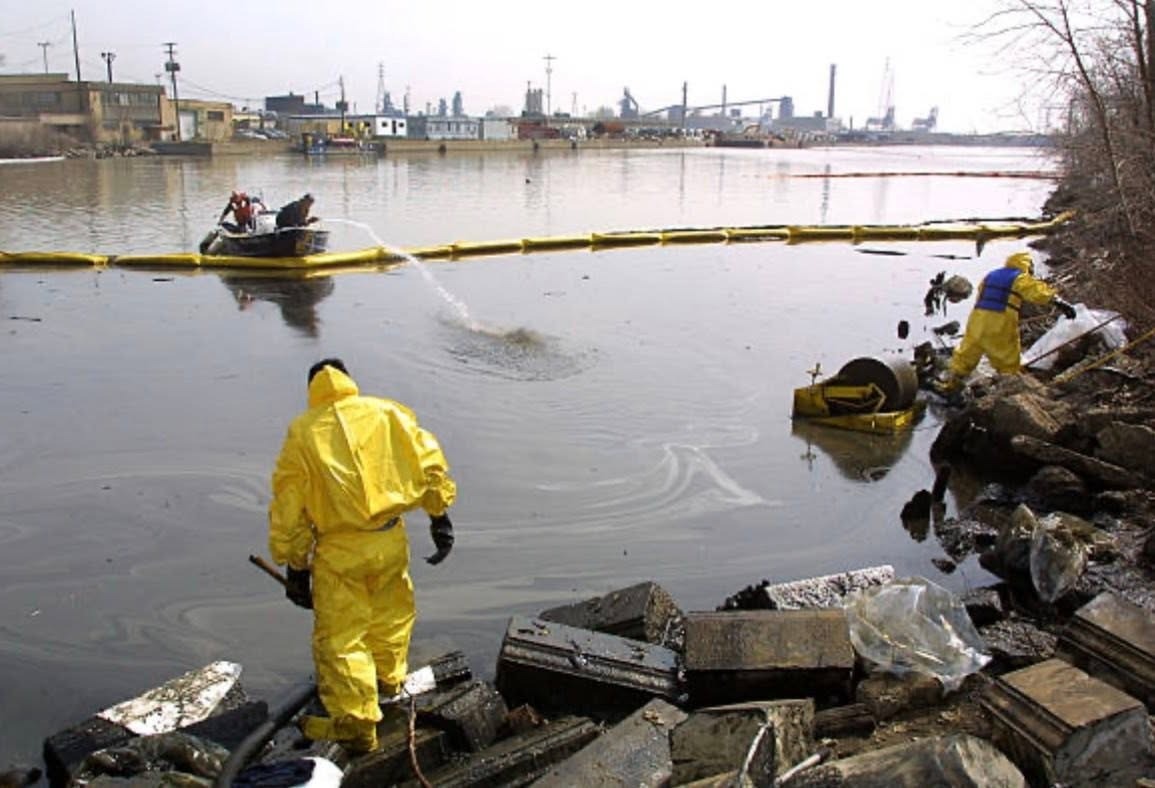
The Spill With No Name
In April 2002, oil started showing up in the Rouge River outside Detroit. Nobody knew where it was coming from, and it was growing each time it rained. The U.S. Coast Guard and the EPA mobilized to clean it up and track down the source.
I was called in from Chicago to support the public information operations. This case would be one of my first real exposures to a Joint Information Center and Public Information Assist Team operations. Crisis Communications and incident response fascinated me. This was a time just after 9/11 when response plans and procedures were getting a long hard look to see how they could better align on a national scale. I didn't know yet how many more of these I'd end up running over the next decade and how I would eventually get to be a manager for the PIAT.
The Rouge River Mystery Spill as it was called ended up the worst Great Lakes oil spill in over a decade, fouling more than 27 miles of river, a record that would be held until the Enbridge spill in 2010. There are mixed numbers of how much was actually spilled. I've seen 90,000 gallons to 300,000+ gallons of diesel and used motor oil. We mobilized 180 responders and recovered 44,000 gallons using floating booms and vacuum crews working the worst-hit stretches.
Birds were dying. Boaters and fishermen wanted the river back. Cleanup costs blew past two million dollars.
And we couldn't tell anyone who did it, because we didn't know. Hell, we still don't know.
EPA and Coast Guard investigators played detective for weeks: checking storm drains, pulling samples from industrial sites along the river, comparing chemical signatures against the spill itself. Every day without an answer was a day our team had to stand in front of the public and the press with real information about what we did know, the extent of the damage, the water safety, the cleanup progress, while the one question everyone actually wanted answered stayed open.
It never closed. Local reporters were still writing "source unknown" stories in 2006. A decade after the spill, in 2012, no charges had ever been filed. As far as public record shows, no one was ever held responsible.
Most crisis communications stories end with a name attached to what went wrong. This one didn't. The job wasn't promising an answer we didn't have. It was giving people something true to hold onto while the actual answer never came.
P.S. - The most useful skill I picked up on that response had nothing to do with messaging: finding good places to grab lunch in the field so you could bring food back for the rest of the JIC. Twenty-four years later, that one still holds up.
Post a comment