Tweeting a Case
It was the late 2000s and I was alone in the office, my staff off in training or doing other assignments, when the phones blew up. The command center called to notify us of a reported person in the water that several units and Good Samaritan vessels were responding to. I started working on a press release but kept getting pulled out of it to answer calls from the media.
At the time, Twitter was a newer site in the social media sphere. We had an established account and I was monitoring it out of the corner of my eye while wishing I had more than just myself in the room. I saw a tweet come across the feed, someone posting that their ferry had stopped because someone had reported a person in the water.
I looked at my half-finished press release, then at the Twitter feed, took the initiative, and sent out a tweet.
"The Coast Guard is responding to a report of a person in the water near Bellingham. #coastguard"
Just 140 characters, Twitter's limit at the time, but I figured it would get the message out and confirm to the media we knew about the report and were responding. As far as Coast Guard Public Affairs doctrine was concerned, I was committing blasphemy. For me, I figured I was putting out my press release 140 characters at a time.
A second tweet quickly followed: "A boat crew from Station Bellingham and a helicopter crew from Group/Air Station Port Angeles are on their way to assist. #coastguard" Then a third: "For more information DM, @uscgd13 or call 206-220-7237. A press release will follow as soon as we get more info. #coastguard"
I soon saw the retweets and direct messages light up from the media and my phones quiet down. A passenger sent in imagery and I shared it. Reporters asked questions through Twitter and I answered them there too.
It was all over within 30 minutes. The person in the water turned out to be a log. It still turned into an invaluable lesson in the power of social media during an active case.
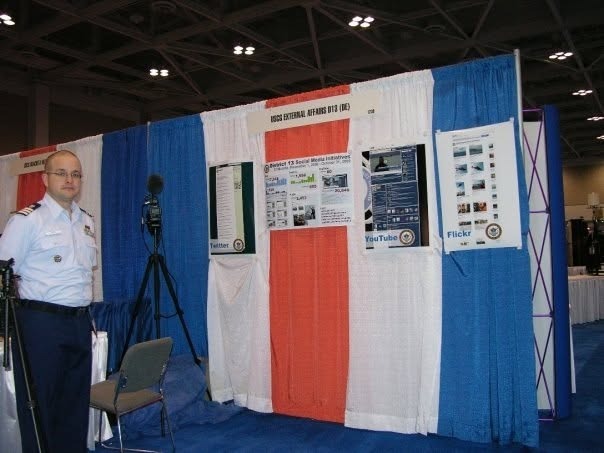
I wrote up a case study and lessons learned, researched best practices, and tried to quantify the reach in the best way I could. Using that material, I submitted to the U.S. Coast Guard Innovation Program, which solicits ideas from across the service to implement change. The program invited our office to the USCG Innovation Expo, where I presented the case study as part of the USCG's first PodCamp.
Working with public affairs leadership, we took our lessons learned and built best practices for using Twitter during a case. I wasn't a high-ranking leader on a national level. I just used the opening I had, and it became a practice adopted across the service nationwide.
Post a comment