Yes, I Told Christopher Nolan No
Yes, I told Christopher Nolan no.
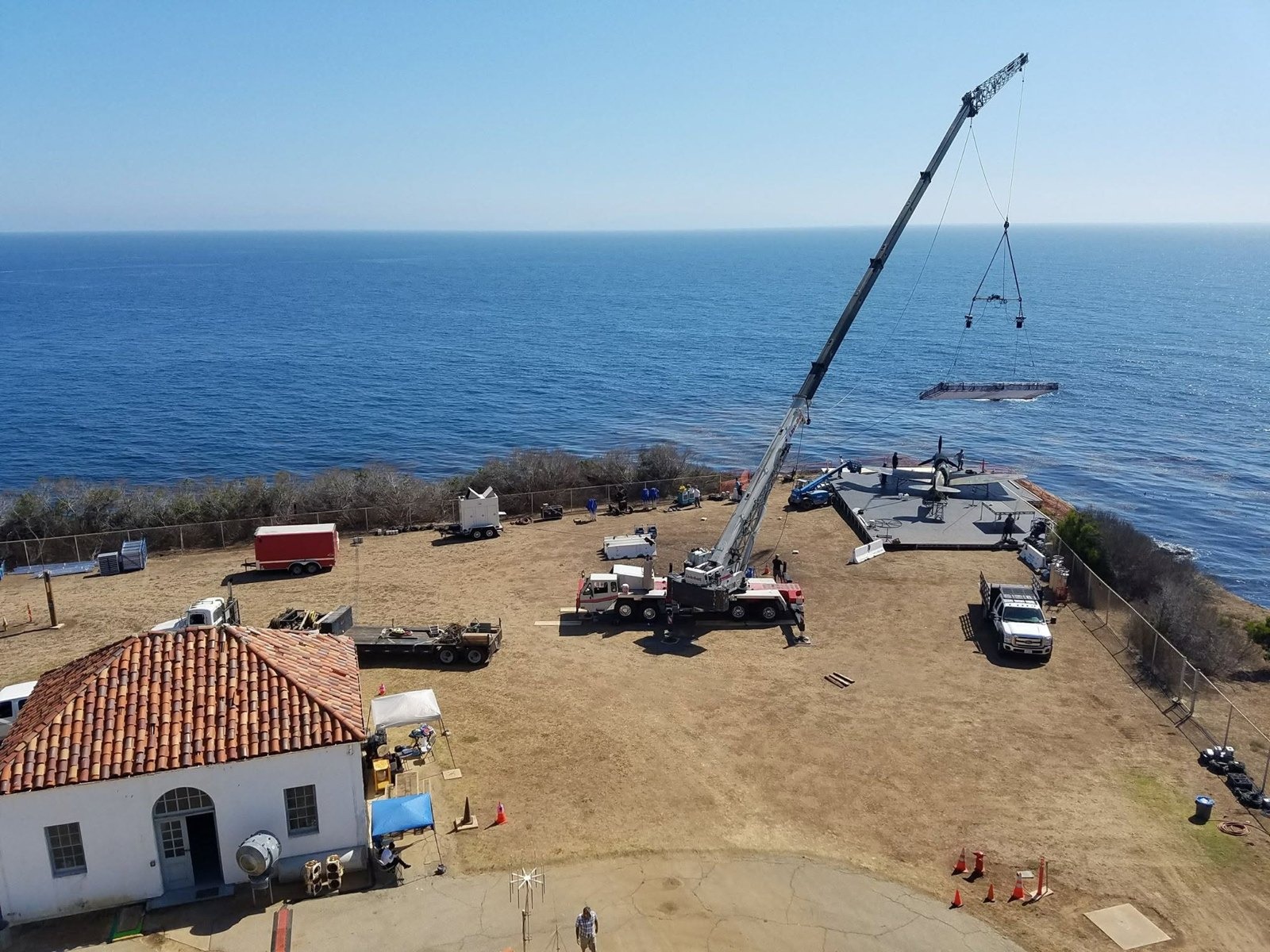
I know, blasphemy, right? The thing is, he was asking for something that we couldn’t do by policy. In 2016 Nolan was working on Dunkirk and was shifting back to California for stage, tank, and some other work on the film. One thing he was looking for was a spot that had ocean views that could look like the English Channel so they could shoot some gimbal work with actors in cockpits and shoot a moment of a pivotal scene at the end of the film. He fell in love with the cliff at the Point Vicente Lighthouse.
Here’s the problem, the lighthouse is an active aid to navigation and it’s owned by the U.S. Coast Guard. At the time of filming, the property was also home to three senior officers and their families. Our policy doesn’t allow for the filming on property unless there is some sort of nexus to the service and an on-screen representation. We also can’t compete with commercially available resources. This means, if there are other cliffs that could serve the purpose we can’t give him the use of ours because it’s free vs the production having to pay to rent another property.
Needless to say no was not an acceptable option for the production. They tried going over our head to Coast Guard leadership (the decision lies in our office and our office alone, there is no appeal), the state, and even congress. Each time we explained that our policy didn’t allow us to say yes but, if there is a way to get us on screen we might be able to make it work.
How do you get the U.S. Coast Guard into a film about the largest wartime maritime evacuation in history when, at that point in the war, the U.S. was not involved? Historically in 1940 the U.S. Coast Guard was gearing up for a potential war. We were doing neutrality patrols, and ocean weather stations.
We pitched a U.S. Coast Guard character that could be an observer to see how the evacuation was being conducted. We pitched references to the Ocean Weather Stations. We pitched a post credits tie-in to the evacuation of lower Manhattan on 9/11, which is now the largest maritime evacuation in history. Nothing was landing and we kept circling back to no.
Meanwhile, our office continued to get calls from our leadership, studio leadership, state and local film offices, and even congress to get to yes and support the film. The ask, as we say, wasn’t small. It required access to the site for almost a month of prep, and filming, plus another week to restore the site. It required demolition of a non-historic concrete wall, the removal of fencing, the building of a stage and gimbal system, access for a large crane and other studio equipment, the list went on and on. We needed something in return.
One last try, what about doing some behind the scenes content showing the support and giving us a chance to talk about the 9/11 comparison. On top of that, why don’t we do a tie-in with the cast where we expose them to the U.S. Coast Guard and how we work with a visit to the local Coast Guard base?
That ended up being acceptable to the studio with an additional offer to use Coast Guard personnel in a scene filming in the tank at Universal Studios. We got to yes! Nolan got to use the property and we got on-screen credit and depictions. The policy was followed and we were part of a major film with a top-tier director.
You may never know the U.S. Coast Guard supported the film unless you watch the end titles and if you did, and were wondering why the production was thanking the U.S. Coast Guard, now you know.
Post a comment